Global industrial motor manufacturing demands exceptional quality assurance to sustain market leadership in highly competitive sectors. International corporations that produce advanced traction systems for electric vehicles or high-torque industrial drives face strict operating standards daily. The ongoing shift toward automated smart factories amplifies the need for deep technical validation during the assembly process. Standard static electrical diagnostics can easily confirm basic winding resistance and insulation health before physical distribution. However, static metrics do not reflect actual electromechanical behavior when a motor runs under severe full-load stress. To mitigate this operational risk, prominent global manufacturers require a reliable Professional Motor Load Tester Service Provider to evaluate active torque, heat dissipation, and mechanical output curves. Industry giants like Nidec and Mitsubishi choose specialized dynamic validation frameworks to secure their massive production lines. These elite enterprises select testing assets based on data repeatability and continuous hardware endurance under high-volume factory conditions. Robust dynamic screening allows factory supervisors to eliminate component defect escapes and secure downstream supply chain integrity. Consequently, partnering with a competent load verification authority remains a critical commercial strategy for modern automation brands. Comprehensive evaluation ensures that every power unit complies with international standards before final integration.
Reason 1 — Transient Precision: Mastering High-Dynamic Torque and Speed Acquisition
Dynamic measurement precision represents the primary technical requirement for modern load testing platforms. When evaluating modern powertrain components, engineering teams must track tiny mechanical fluctuations without experiencing signal processing delays or data damping. A complete validation process must capture the entire torque-speed curve, spanning from stall torque to maximum operational velocities. To fulfill this strict requirement, industrial facilities deploy a dynamometer tester to capture rapid torque and speed variations. These diagnostic instruments utilize non-contact rotary torque sensors and highly specialized flexible coupling systems. This precise mechanical configuration effectively isolates the pure rotational output of the motor from surrounding ambient test bench vibrations. At the same time, advanced digital filtering algorithms screen out high-frequency electrical noise from the collection channels. As a result, the acquisition hardware eliminates external inertial noise from the collected data streams. This extreme data clarity allows aerospace and automotive suppliers to achieve complete compliance with strict international measurement tolerances. By capturing transient micro-changes at millisecond intervals, manufacturers gain total visibility into rotational stability and magnetic pole interactions. Consequently, assembly lines can identify microscopic physical alignment errors before the products leave the factory floor.
Reason 2 — Multi-Parameter Convergence: Mapping Real-Time Electro-Mechanical Efficiency Matrices
Comprehensive efficiency analysis requires the simultaneous alignment of multiple distinct physical parameters. Legacy testing methods often evaluate electrical characteristics and mechanical outputs in completely separate diagnostic cycles. However, this fragmented approach fails to construct an accurate real-time energy transformation map. Modern test benches resolve this data gap by combining multi-channel data fusion architectures inside a unified digital environment. The testing system processes electrical input power alongside physical mechanical output power concurrently to calculate net energy efficiency matrices. Specifically, efficiency equals the output mechanical power divided by the input electrical power, multiplied by one hundred percent. Advanced digital signal processors synchronize separate streams of voltage, current, power factor, torque, and rotational speed. This absolute synchronization provides deeper insight into operational core losses and winding resistance changes under heavy load. Furthermore, specialized testing platforms trace complex brush wear patterns and commutation stability under peak load states. This level of cross-parameter validation ensures that the final electromechanical assembly performs efficiently under any unpredictable field condition.
Reason 3 — Industrial Thermal Endurance: Guaranteeing Zero Calibration Drift Under Continuous Duty Cycles
Industrial factory floors present harsh operating environments characterized by extreme ambient temperatures and continuous duty cycles. Testing systems must withstand severe thermal stress during twenty-four-hour mass production schedules. Heavy-duty loading mechanisms like eddy current brakes or magnetic particle brakes generate intense thermal loads while absorbing continuous mechanical energy. If the testing system lacks sufficient thermal management, the sensitive measurement sensors will suffer from severe calibration drift. To combat this industrial challenge, advanced test benches incorporate active liquid or forced-air cooling systems into the core loading assemblies. These automated thermal regulators keep the internal operating temperature stable throughout long manufacturing shifts. This thermal equilibrium completely prevents reading deviations, ensuring total data consistency across all evaluation cycles. Therefore, the ten-thousandth motor evaluated on the line receives the same measurement accuracy as the very first unit tested. By eliminating calibration drift, production managers successfully lower product scrap rates and protect downstream assembly operations.
Reason 4 — Adaptive Application Engineering - Choosing a Highly Compatible and Adaptable Testing Solution
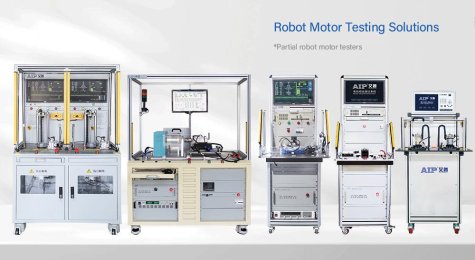
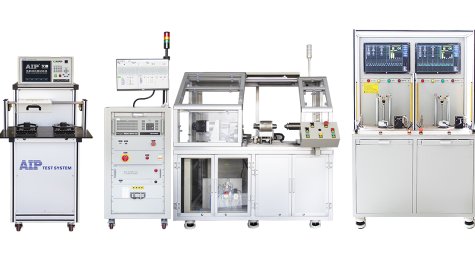
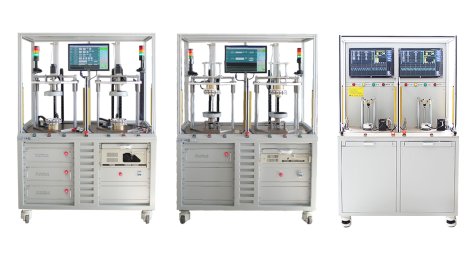
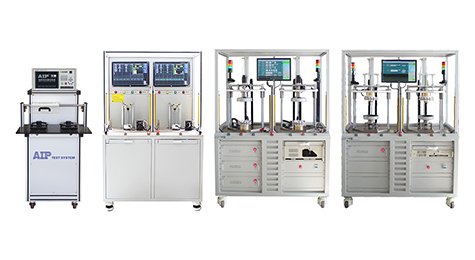
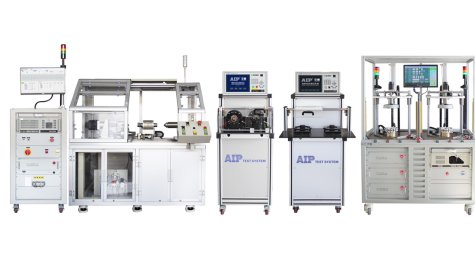
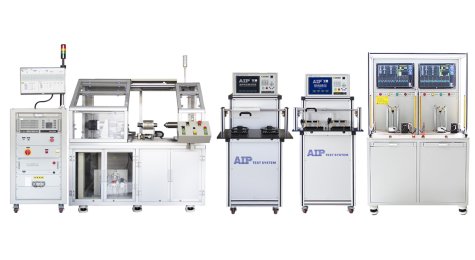
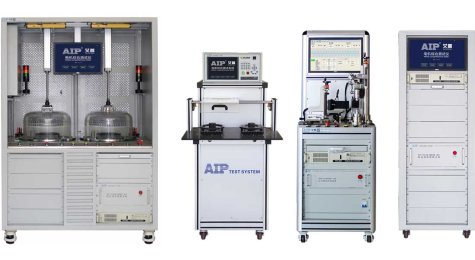
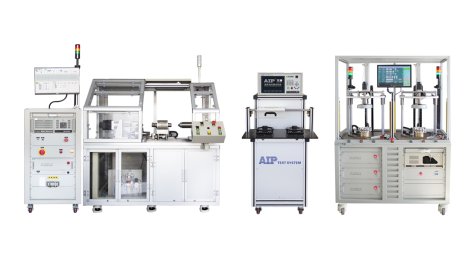
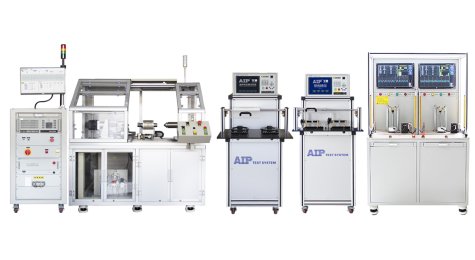
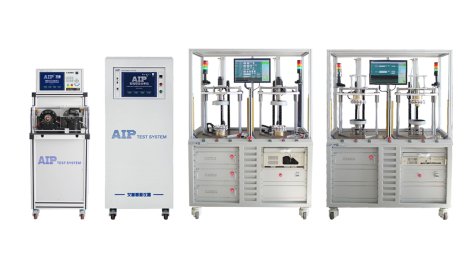
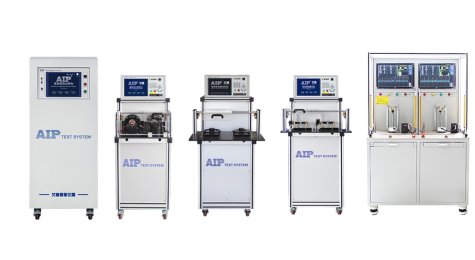
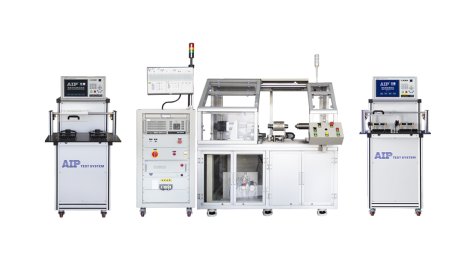
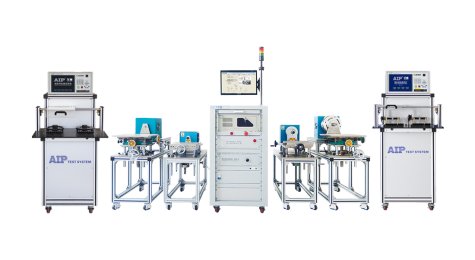
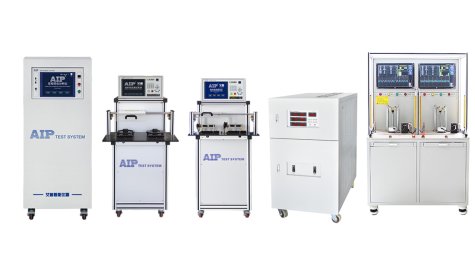
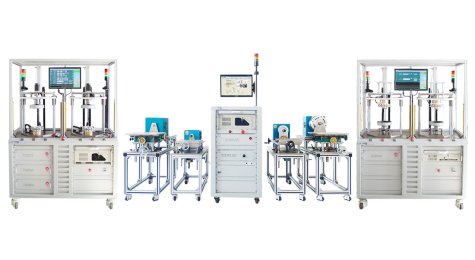
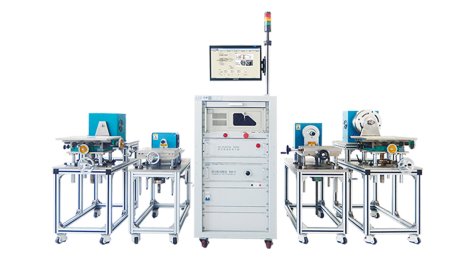
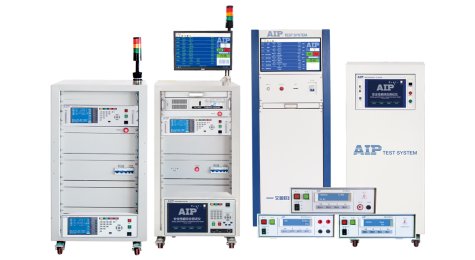
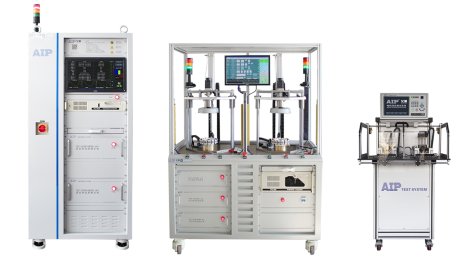
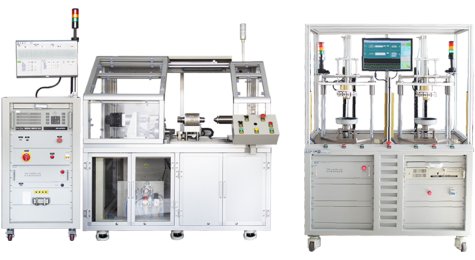
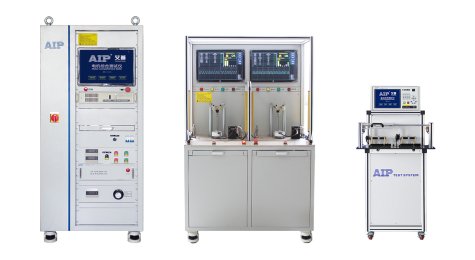
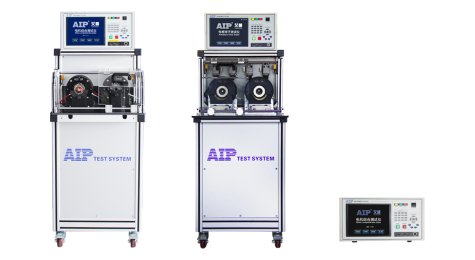
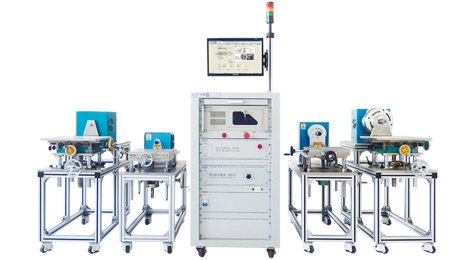
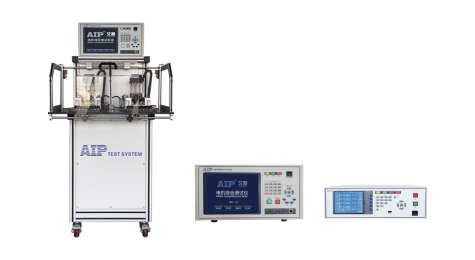
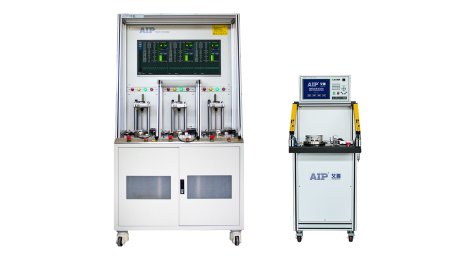
Diverse product portfolios require multifunctional diagnostic equipment that can easily adapt to market changes. To address this, AIP Instrument has developed an intelligent dynamometer testing system engineered to serve both laboratory and production line environments. In laboratory settings, the system generates full T-N performance curves; on the production line, it executes fixed-point load testing with rapid fixture clamping and one-touch operation. A single control system handles AC, DC, and brushless motor configurations, with switching between modes managed entirely through software. Synchronised input-output and load control are integrated within a single unit, eliminating data asynchrony and ensuring measurement accuracy. System precision reaches 0.2% for general parameters and 0.1% for rotational speed, supporting realistic life-cycle simulation by replicating actual motor operating conditions.


Reason 5 — Proactive Lifecycle Architecture: Optimizing Factory OEE with Global Service
Operational equipment effectiveness depends heavily on proactive asset maintenance and rapid technical response networks. High-volume manufacturing plants cannot afford unexpected downtime due to diagnostic equipment failures. To eliminate this operational vulnerability, AIP Instrument(Qingdao AIP Intelligent Instrument Co., Ltd.) integrates intelligent self-diagnostic protocols directly into the control firmware. The software continuously monitors internal instrument health and alerts supervisors before wear affects total measurement accuracy. Additionally, a comprehensive global service network offers real-time telemetry tracking and remote fault isolation across international borders. Secure digital channels allow factory operators to receive remote troubleshooting support from expert application engineers instantly. If localized maintenance becomes necessary, field teams deploy quickly with modular spare parts to perform precise hardware calibrations. This proactive lifecycle strategy guarantees continuous production uptime and maintains strict compliance with ISO and CE metrology standards.
Conclusion: Securing Market Authority Through Enterprise-Scale Load Validation
Modern motor manufacturing requires a definitive transition toward high-fidelity dynamic load validation. Enterprise-scale testing systems protect capital investments and eliminate heavy warranty liabilities for international brands. By integrating precise transient tracking, thermal endurance, and global service frameworks, AIP Instrument empowers factories to optimize their production throughput. Ultimately, choosing a proven technology partner allows global corporations to secure market authority and deliver flawless motion control products.
To review specialized industrial testing configurations and access comprehensive technical specifications, explore the official global portal at https://www.aiptesting.com/.